Place and history
Inside Kaigen
Kaigen became prosperous by managing western sea traffic. Its licensed antiquities trade gives Myak agents a route into respectable houses.
City or settlement
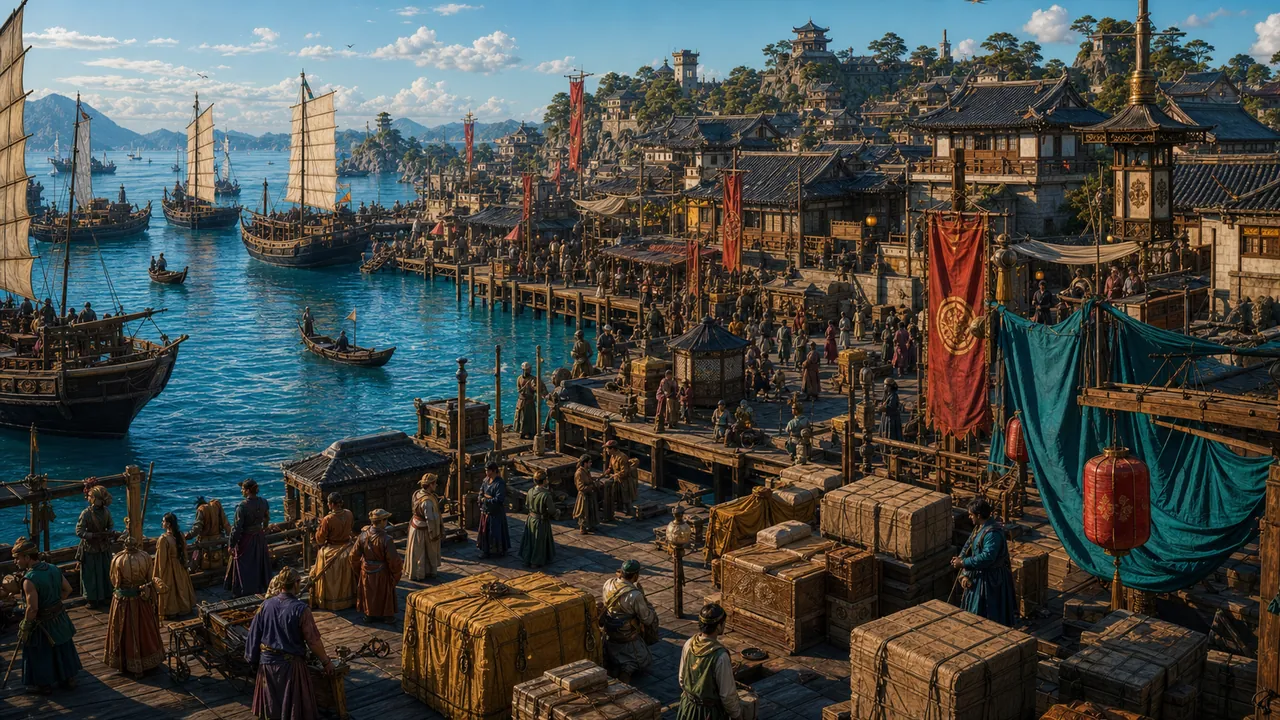
A harbour where mainland goods, pilgrims and antiquities enter the islands.
Place and history
Kaigen became prosperous by managing western sea traffic. Its licensed antiquities trade gives Myak agents a route into respectable houses.
Kaigen grew around the safest western anchorage in Tamakari. Deep quays, repair yards and guarded storehouses serve vessels arriving from the mainland, while steep streets climb towards warrior compounds, shrines and licensed trading houses. The city looks outward more readily than most of the Banner Isles, but every foreign crew is recorded and watched.
Shipwrights, pilots, interpreters and warehouse families give Kaigen a noisier, less formal character than the inland estates. The theatre quarter and antiquities market attract nobles as well as sailors. That mixture creates opportunity for Myak agents, who can hide forbidden relic traffic behind respectable collections, scholarly patronage and gifts exchanged between important houses.
The opening of a sealed Genji cave above the old shore road brought scholars, retainers and opportunists into conflict over who could examine what lay inside. Officially the chamber is controlled. Unofficially, fragments may already have entered private collections and travelled beyond Tamakari.
Kaigen's merchants argue that naval strength depends upon open trade, practical shipbuilding and knowledge of foreign powers. Traditional houses fear that the same openness weakens Tamakari's control of Essan discoveries. Mika and Hiro's westward journey therefore begins in a city where the national argument is visible on every quay: learn from the wider world, or keep it at a guarded distance.