Place and history
Inside Fujikawa
A northern island settlement overlooking sheltered water and mountain approaches.
City or settlement
A northern island settlement overlooking sheltered water and mountain approaches.
Place and history
A northern island settlement overlooking sheltered water and mountain approaches.
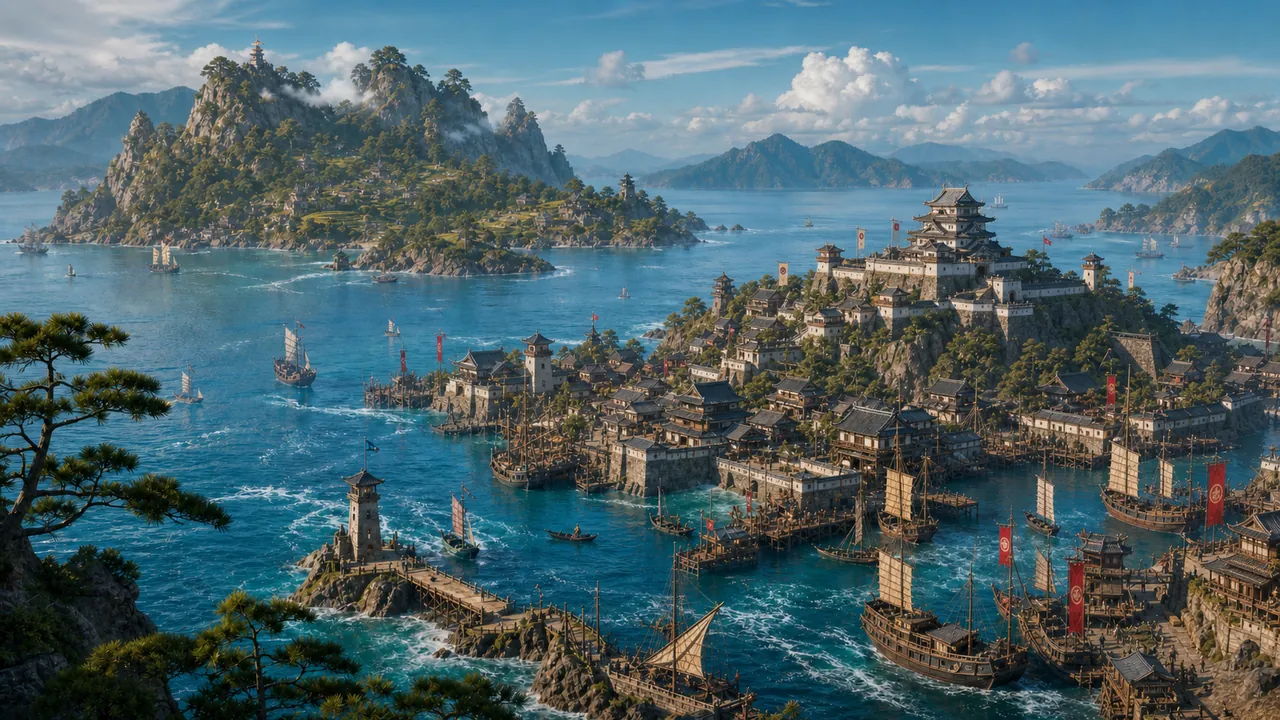
Fujikawa commands sheltered water beneath Tamakari's northern mountains. Its harbour is smaller than Kaigen's, but its position makes it a natural assembly point for patrol craft and messengers moving between the outer islands. Terraced estates, timber halls and hillside shrines overlook the anchorages.
The local court is associated with strict interpretations of inherited service. Landholding families maintain boats, horses or armed retainers according to old obligations, and disputes are judged through precedent rather than convenience. Younger officers increasingly question whether those duties suit the threats now reaching Tamakari.
Mountain paths behind Fujikawa lead to caves, abandoned sanctuaries and watch stations older than the present houses. Most finds are surrendered to appointed custodians. Smuggling remains possible because fishermen and charcoal burners know minor paths that never appear in official route books.