Place and history
Inside Suntari Jungle
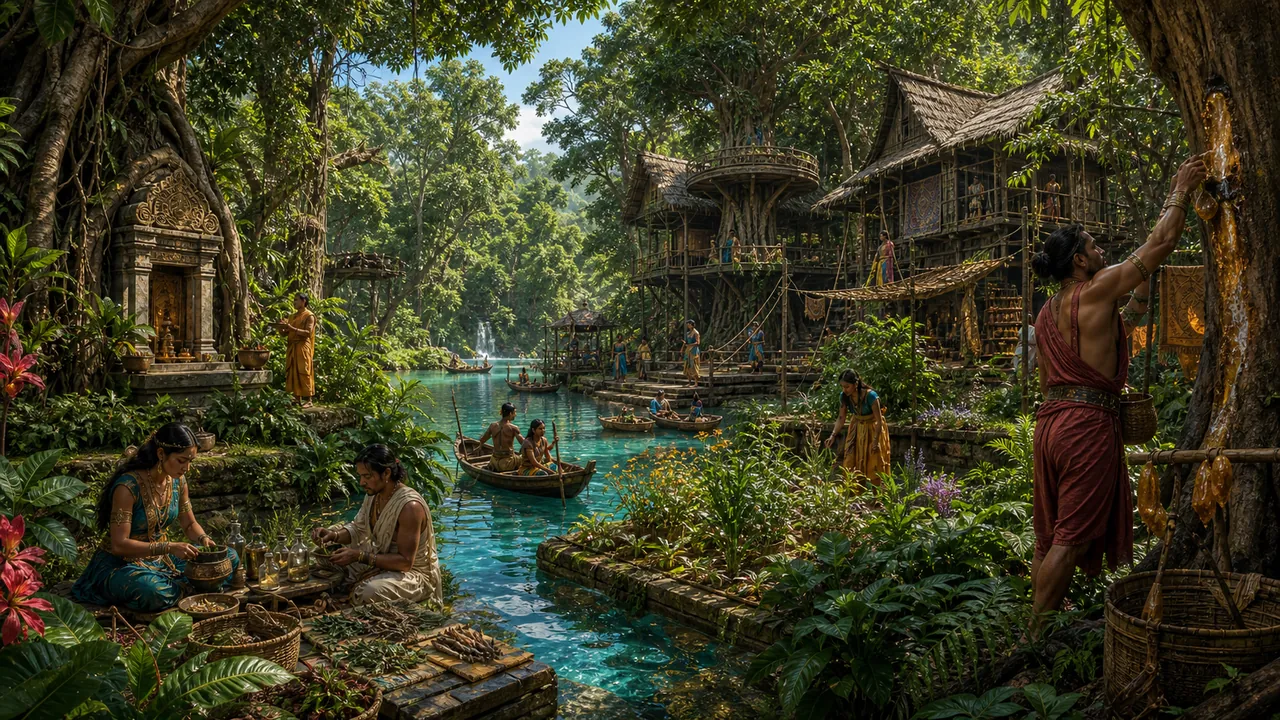
The Suntari Jungle is inhabited and remembered, not blank terrain. Communities there preserve medicines, routes and oral Essan knowledge frequently misunderstood by outsiders.
Landmark or mapped region
Deep rainforest crossed by rivers, canopy communities and guarded knowledge routes.
Place and history
The Suntari Jungle is inhabited and remembered, not blank terrain. Communities there preserve medicines, routes and oral Essan knowledge frequently misunderstood by outsiders.
The Suntari Jungle is a lived-in landscape of river settlements, canopy paths, hunting grounds and protected groves. Outsiders who see uninterrupted forest miss the boundaries recognised by its communities. Travel depends upon permission, seasonal knowledge and guides who can read water as readily as a road.
Medicines, food plants and oral Essan traditions are preserved through apprenticeship rather than central archives. This makes the knowledge resilient when a building is lost, but vulnerable when a lineage is displaced. River courts often underestimate how much their own survival depends upon Suntari expertise.
Myaks do not need to conquer the forest. They can manipulate collectors, sponsor reckless expeditions or turn one community's grievance against another. The strongest defence is not an outer wall, but trusted relationships able to identify strangers who know too much about a guarded route.