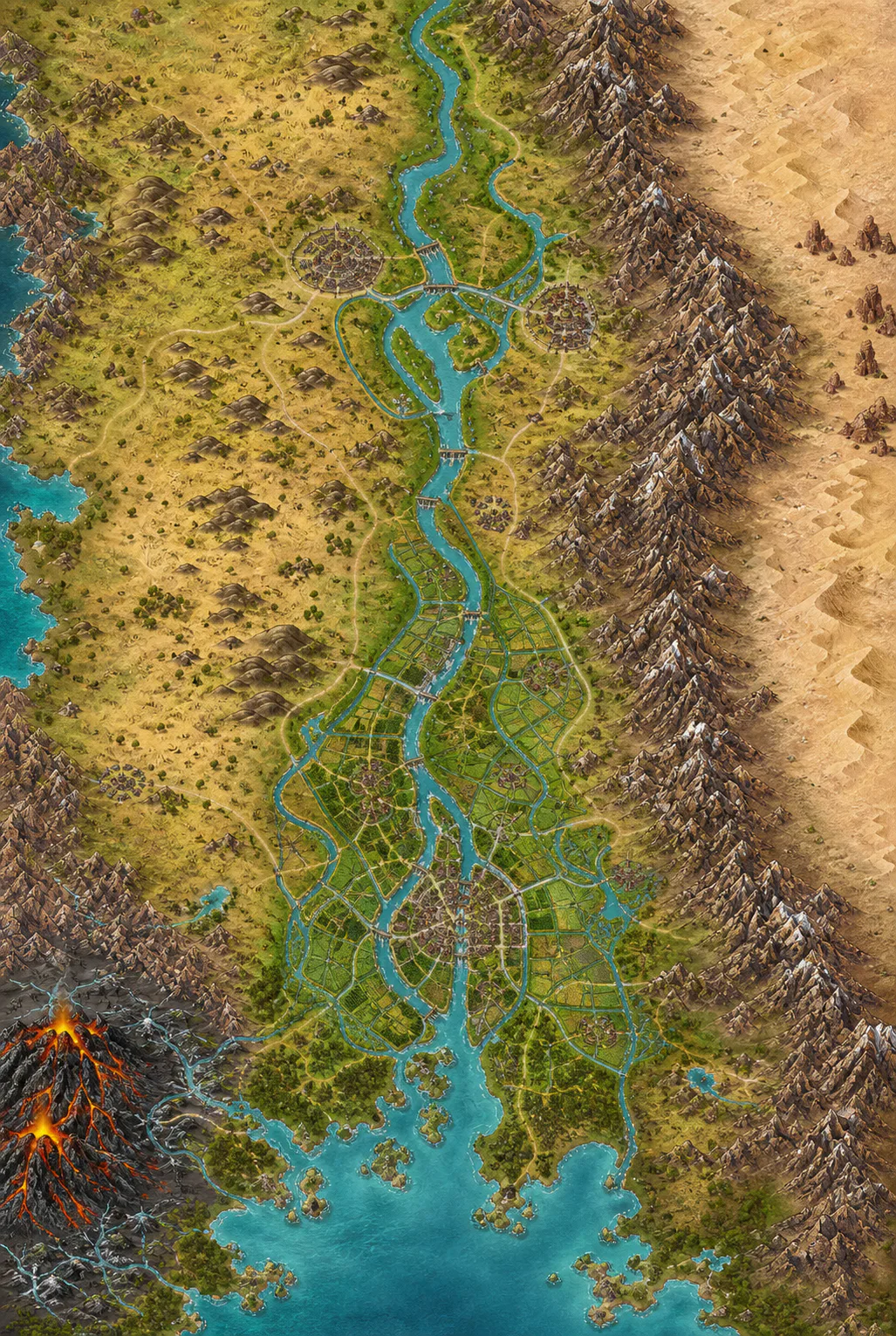
A north-to-south river valley, irrigated lowlands, dry western hills, eastern mountain passes and a sheltered southern bay.
Country overview
About Lignett
The Country of Nine Locks
A narrow river country between dry uplands and an eastern mountain wall. Its wealth comes from controlling water, transport and the approaches to Zarran-Tal.
Country dossier
Power, knowledge and pressure
The landscape, rivalries and traditions shaping Lignett.
Nine lock-owning houses dominate the River Court. Town councils and landholders have limited representation, while toll offices carry unusual political power.
Professional river guards, engineers, crossbow units, fortified lock stations and contracted cavalry for the drier uplands.
Knowledge is practical and tightly licensed. Engineers record unexplained changes in water pressure, stone resonance and old lock foundations, but elite houses conceal the best findings.
Myaks target debt records, lock engineers and captive populations. Control of one forged charter can move goods and people through several guarded crossings.
The river leads north towards Snattack's open country and south to the sea. Mountains and desert separate Lignett from Zarran-Tal to the east, while the western Celtan sphere presses close.
Alderdash sits at the heart of competing river and pass claims. Ythranis wants freer trade, while the lock houses argue that control is the only thing keeping the country independent.
History and societyHow Lignett became itselfPeople, trade and the turning points that shaped the country.+
Lignett is a narrow river state whose prosperity rests on controlled movement. Locks, contracts and tolls enrich its cities, while slavery and debt make that prosperity morally and politically unstable.
Free guild workers, river families, contract soldiers, merchants, landholders and enslaved labourers live under laws designed to make obligations transferable. Religious houses and free captains form part of a growing resistance network.
Grain, woven rugs, dyed cloth, river craft, tolls, contracted troops and caravan brokerage dominate trade. The Nine Locks let the state raise or halt water and commerce along the main valley.
The Building of the Locks
Successive cities repaired older river controls and founded fortified stations around them. Water offices became richer than many hereditary lords.
The Nine Locks Settlement
Cities, irrigation districts, guilds and contract houses accepted a common Assembly to prevent private lock wars from destroying the valley.
The Contract Age
Public debt and private ownership now reach into the army, courts and slave markets. Reformers and Myak-controlled houses both exploit the resulting instability.
Institutions and peopleWho holds powerThe bodies and individuals through which authority is exercised.+
Nine Locks Assembly
Allocates water, tolls and military contracts among river cities, irrigation districts, guilds and hereditary houses.
The High Factor
Conducts foreign policy and commands the army for a seven-year elected term.
Lock Office
Controls engineering records, flood schedules and the weak Essan mechanisms that keep several old controls functioning.
High Factor
Ors Lenvar
A coalition politician who promises stability while relying on contract houses whose labour practices make reform impossible.
Master of the Fifth Lock
Tavia Neris
An engineer who has discovered that forged maintenance records conceal both relic movement and deliberate flood risk.
Free river captain
Mael Tiran
A veteran convoy commander who quietly moves escaped families south while publicly serving the same houses that would execute him for it.