Place and history
Inside Ghadun
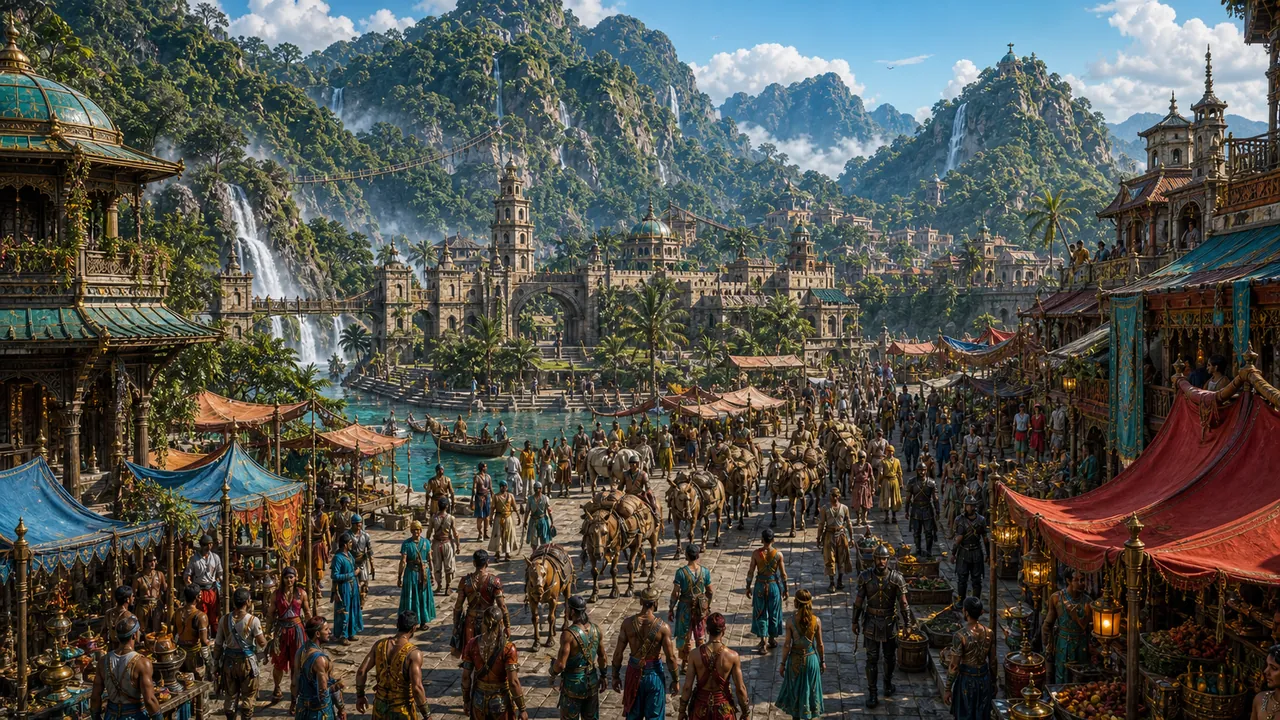
Ghadun prospered because both sides of the mountains needed a trusted place to trade. Its neutrality is practical rather than peaceful, and every neighbouring power watches it.
City or settlement
A mountain exchange city protected by strong neutral market law.
Place and history
Ghadun prospered because both sides of the mountains needed a trusted place to trade. Its neutrality is practical rather than peaceful, and every neighbouring power watches it.
Ghadun occupies a defensible exchange point between highland roads and river valleys. Caravans enter through separate gates, surrender weapons to bonded storehouses and trade beneath laws designed to prevent any one neighbouring power from dominating the market.
The city is not peaceful by nature. Its neutrality survives because guilds, judges and hired wardens all profit from keeping violence outside the market walls. Political exiles and intelligence agents use the crowds, making every major fair both an economic event and a quiet contest of influence.
Ghadun's brokers can identify metal, stone and devotional work from several regions. That expertise makes the city valuable when a relic must be authenticated, and dangerous when a convincing false history is required. Myak buyers prefer intermediaries who never need to know the final destination.