Place and history
Inside Atraquar
Atraquar expanded around guarded wells and customs yards. Legal trade made it prosperous, while relic smuggling made its archives and officials vulnerable to Myak influence.
City or settlement
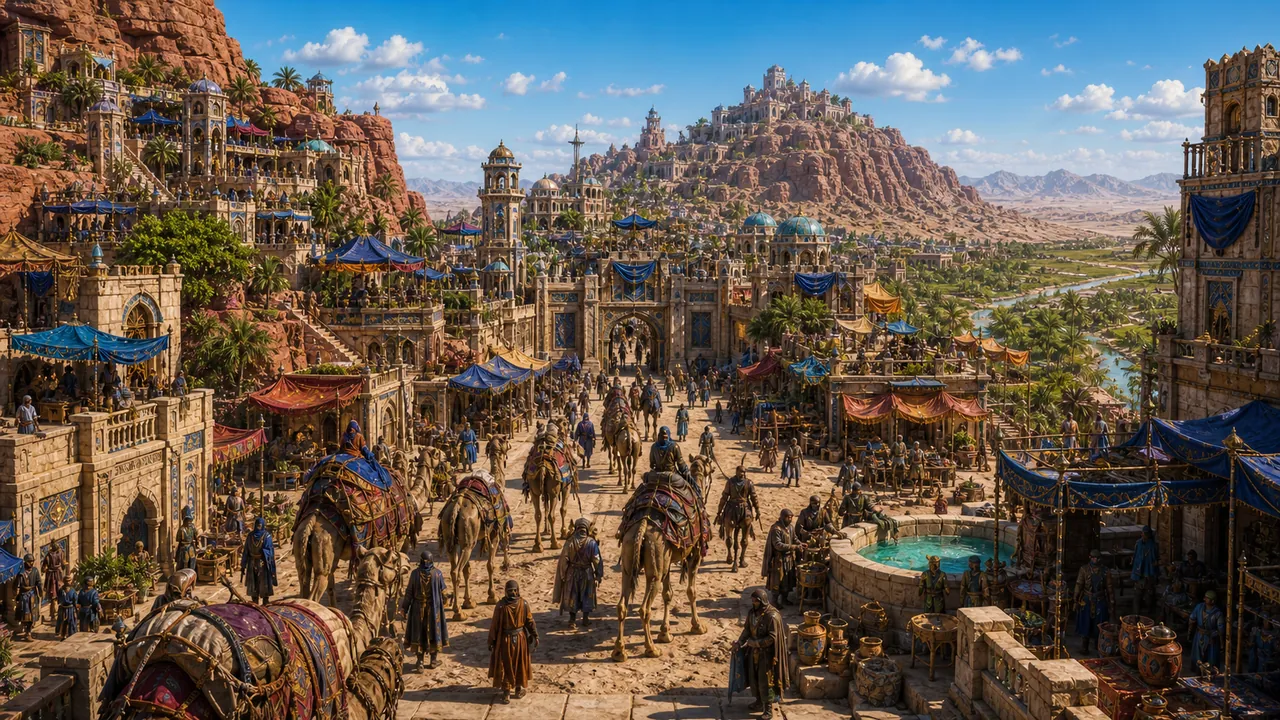
A fortified market where desert and rainforest trade meet.
Place and history
Atraquar expanded around guarded wells and customs yards. Legal trade made it prosperous, while relic smuggling made its archives and officials vulnerable to Myak influence.
Atraquar guards the transition between Zarran-Tal's desert roads and the wetter eastern trade routes. Wells, customs yards and fortified caravan courts support a city built around inspection. Goods wait here to be weighed, taxed and assigned an onward escort.
Customs officials, animal masters, translators and money changers form powerful professional families. Their knowledge makes trade possible, yet also lets them hide irregularities from outsiders. Political factions in Khezran compete to appoint the officers who control the most valuable gates.
Relics are rarely moved as obvious treasure. Fragments may be packed with quarry stone, sealed inside religious gifts or entered under an incorrect dynasty. Myaks cultivate respectable agents who can explain every document, leaving the suspicious part of the journey hidden in plain sight.